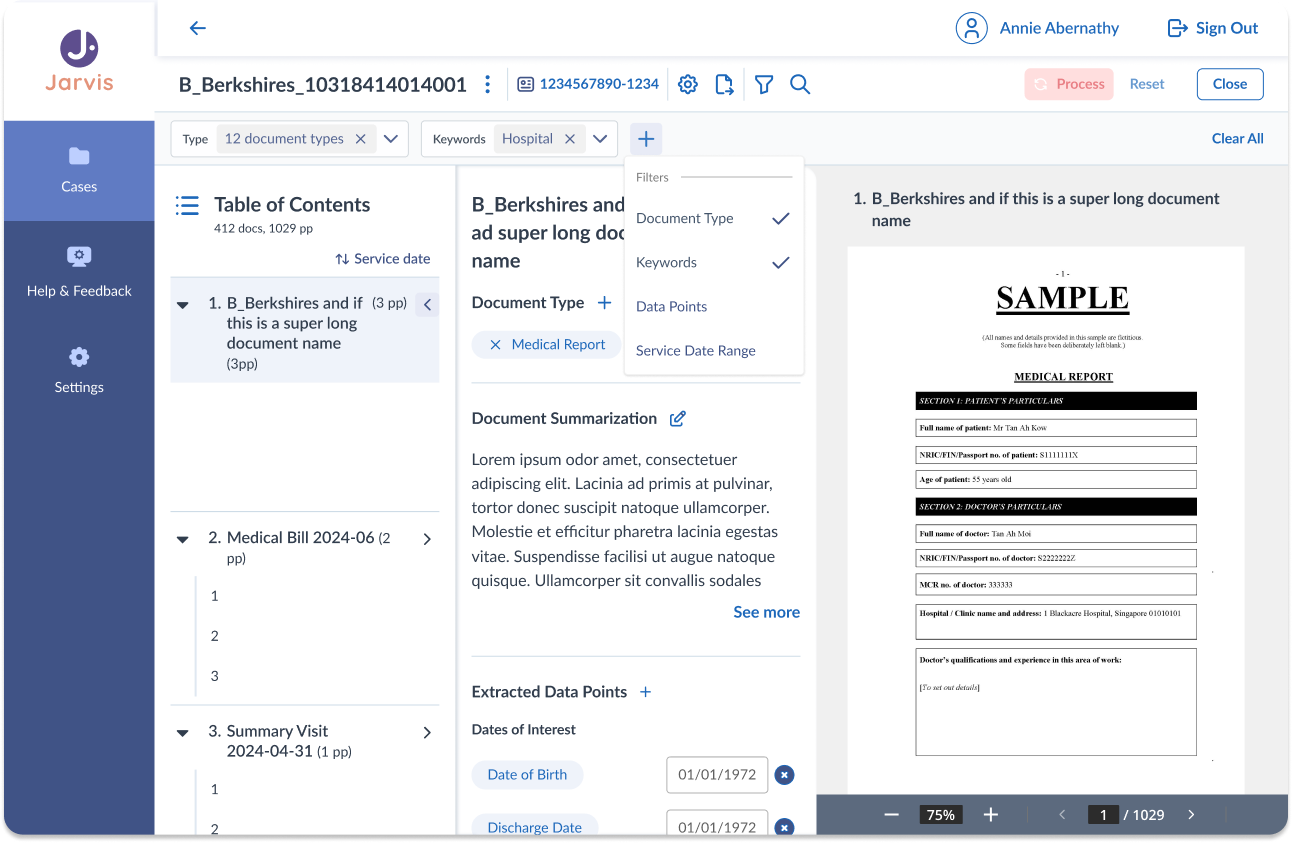
Overview
The Problem
With claim files the size of novels, the real cost isn't time, it's mental load.
An opportunity to address document friction within insurance arose just as the market started to heat up. Earlier research into insurance workflow automation had flagged document processing as a clear winner.
Looking closer at the problem, we could see claims professionals were manually combing through thousands of pages per claim just to find the answers they needed, with limited tooling to help them locate what they needed.
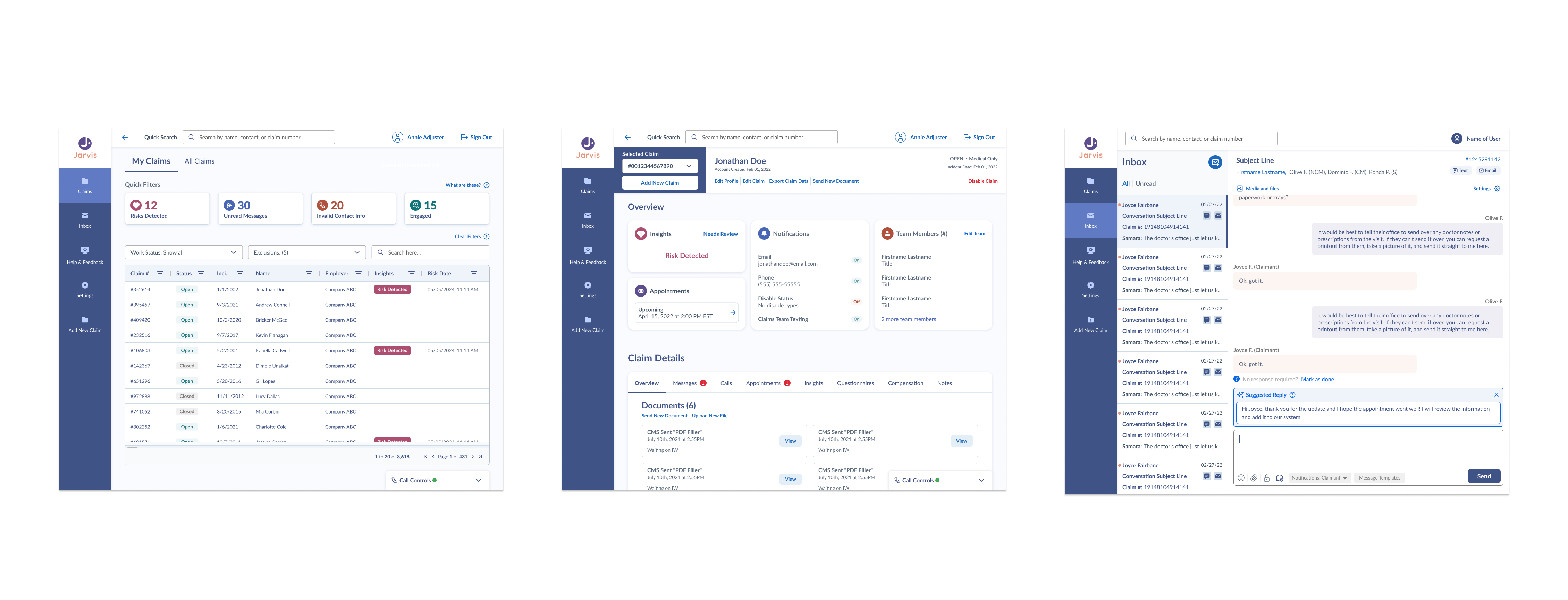
Before · Claims portal core screens
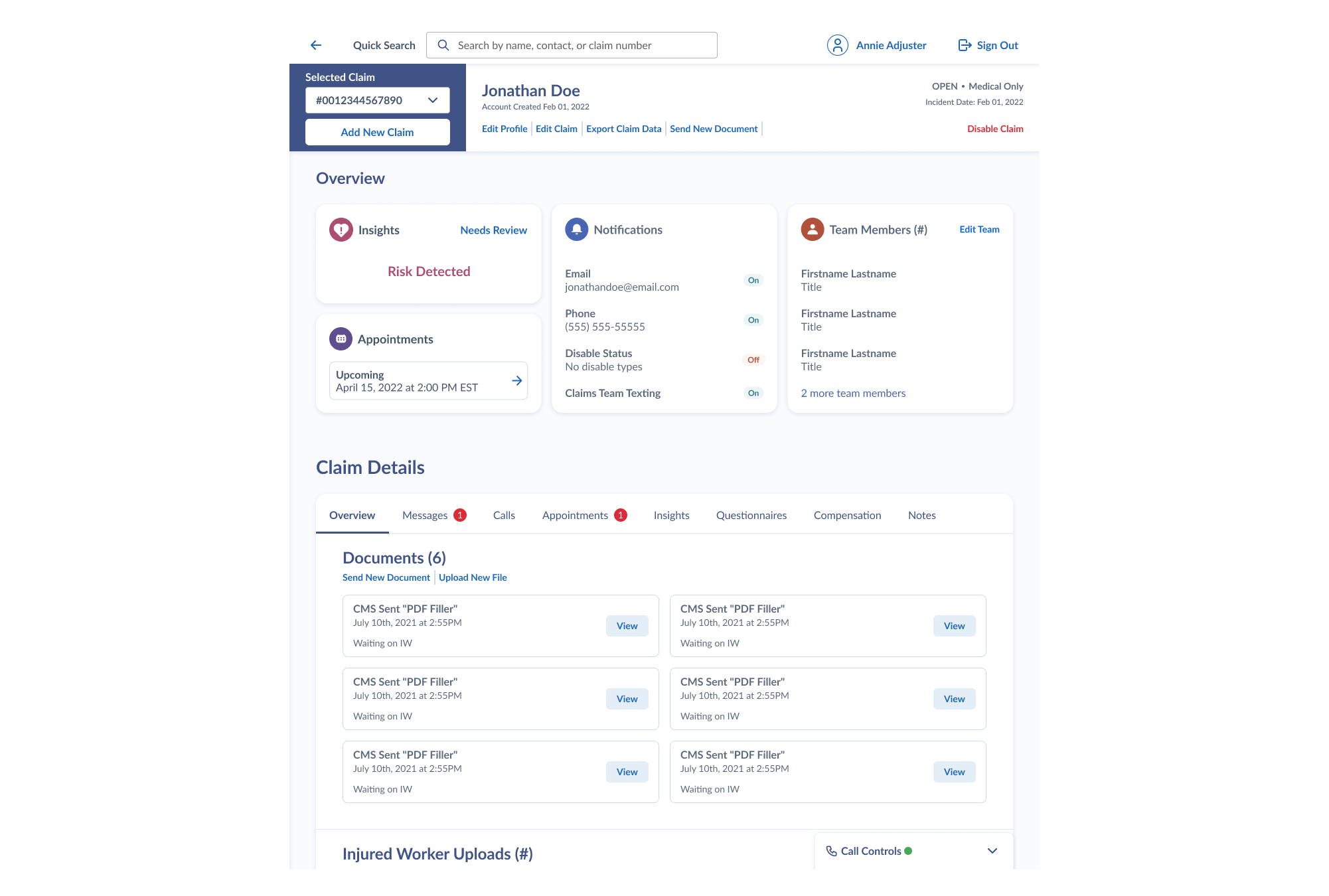
Before · Claim detail view
The Approach
Set up the system, reduce the noise, and give users tools to find their way to their key data
Finding what you need across thousands of pages is like navigating a dense forest. My approach was to build the path first, establishing a clear workflow structure, cutting out the documentation that distracts, and giving users the tools to find their way to what they actually needed.
My role
I owned the end-to-end UX of the IDP tool: research and synthesis, information architecture, interaction design, and engineering handoff. Every design decision, from the document list to the extraction panel, was mine to define and defend.
The team
Engineering built the ML pipeline: OCR, entity extraction, and document classification. The PM owned business requirements and carrier relationships. We worked in tight feedback loops, their technical constraints shaped my design, and my user insights shaped their prioritization.
01
Start with the outer architecture & flow
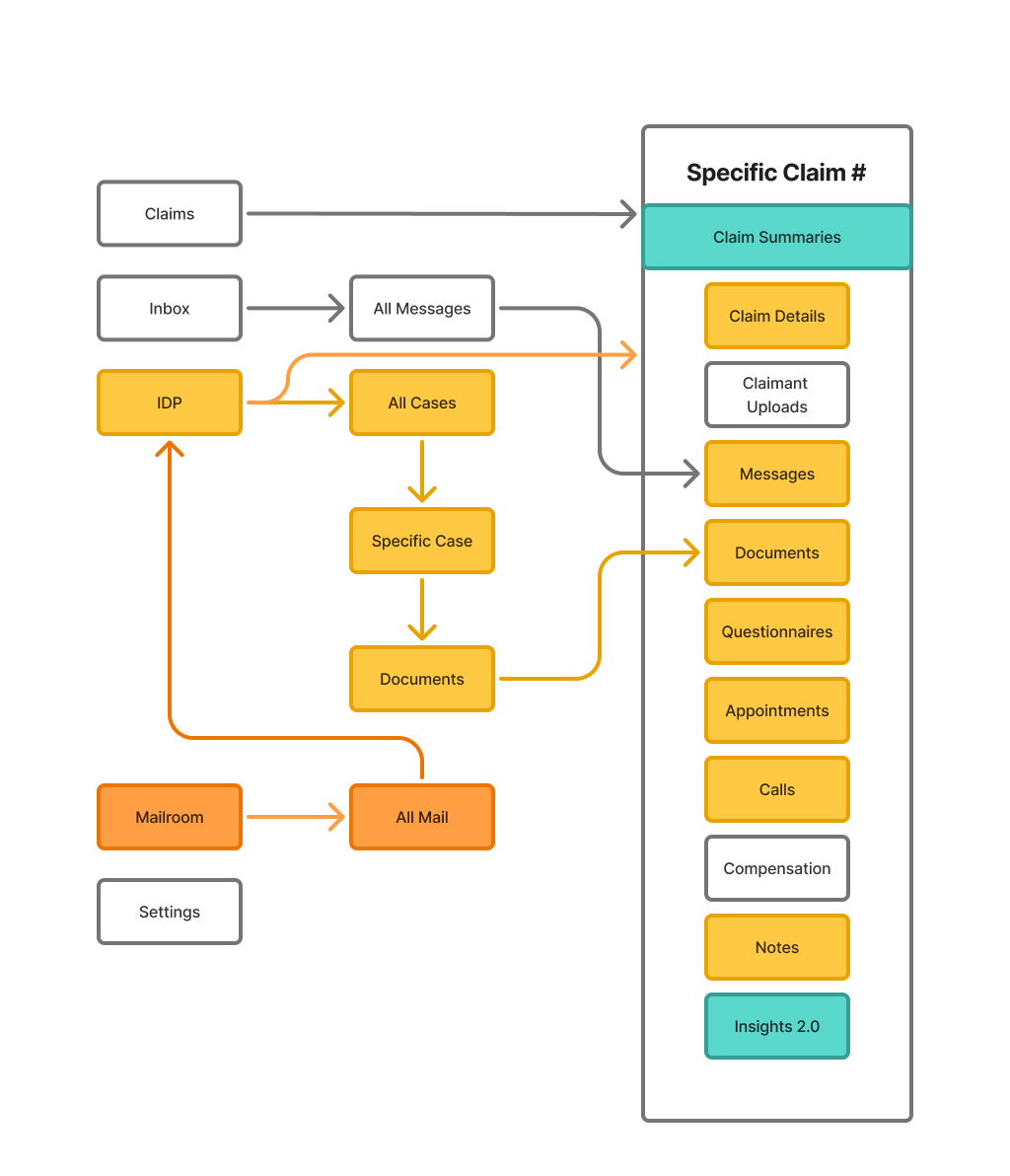
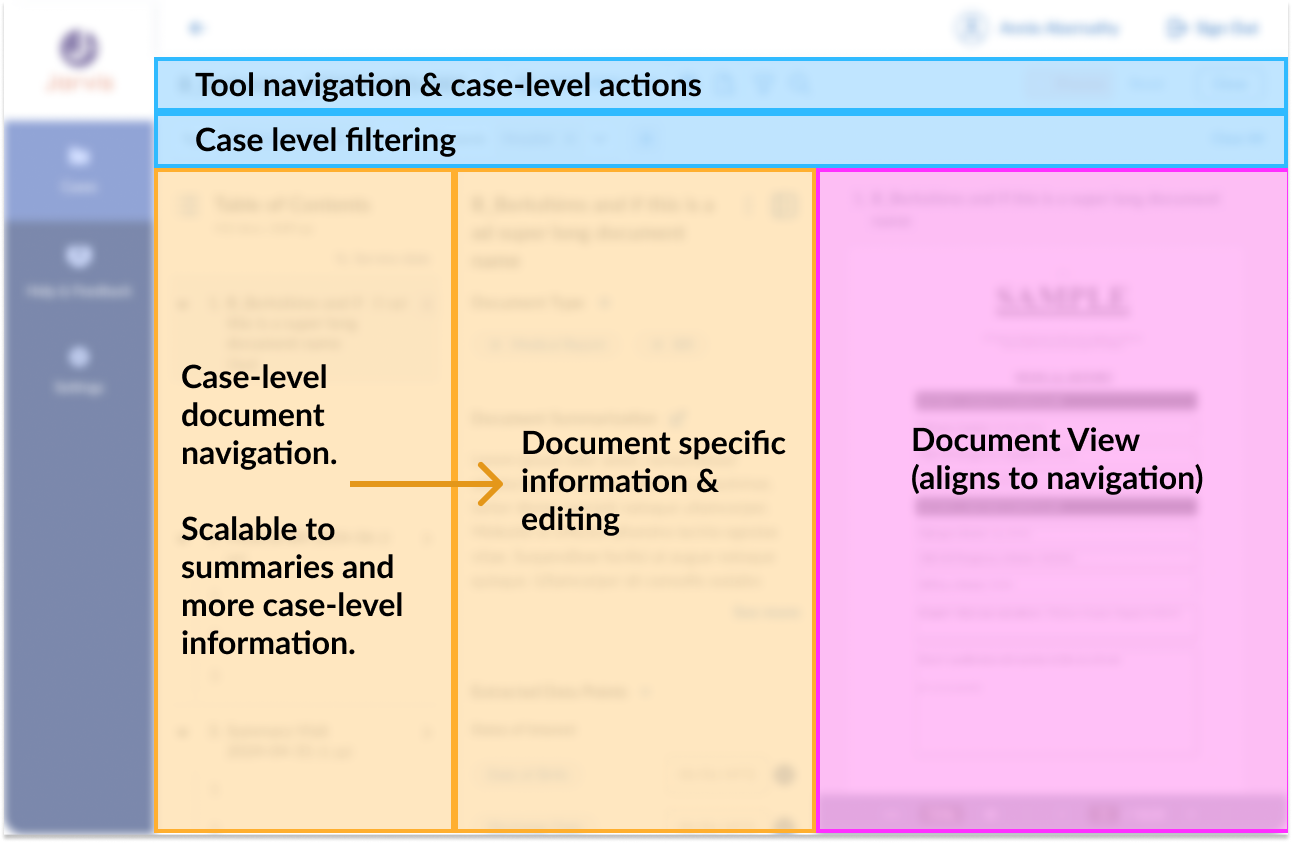
Before any features, the workflow and main editing screen needed to be architected for scale. Automation opportunities like mail room processing and large file ingestion have very different needs, so the foundation had to be flexible enough to grow without requiring structural rework each time.
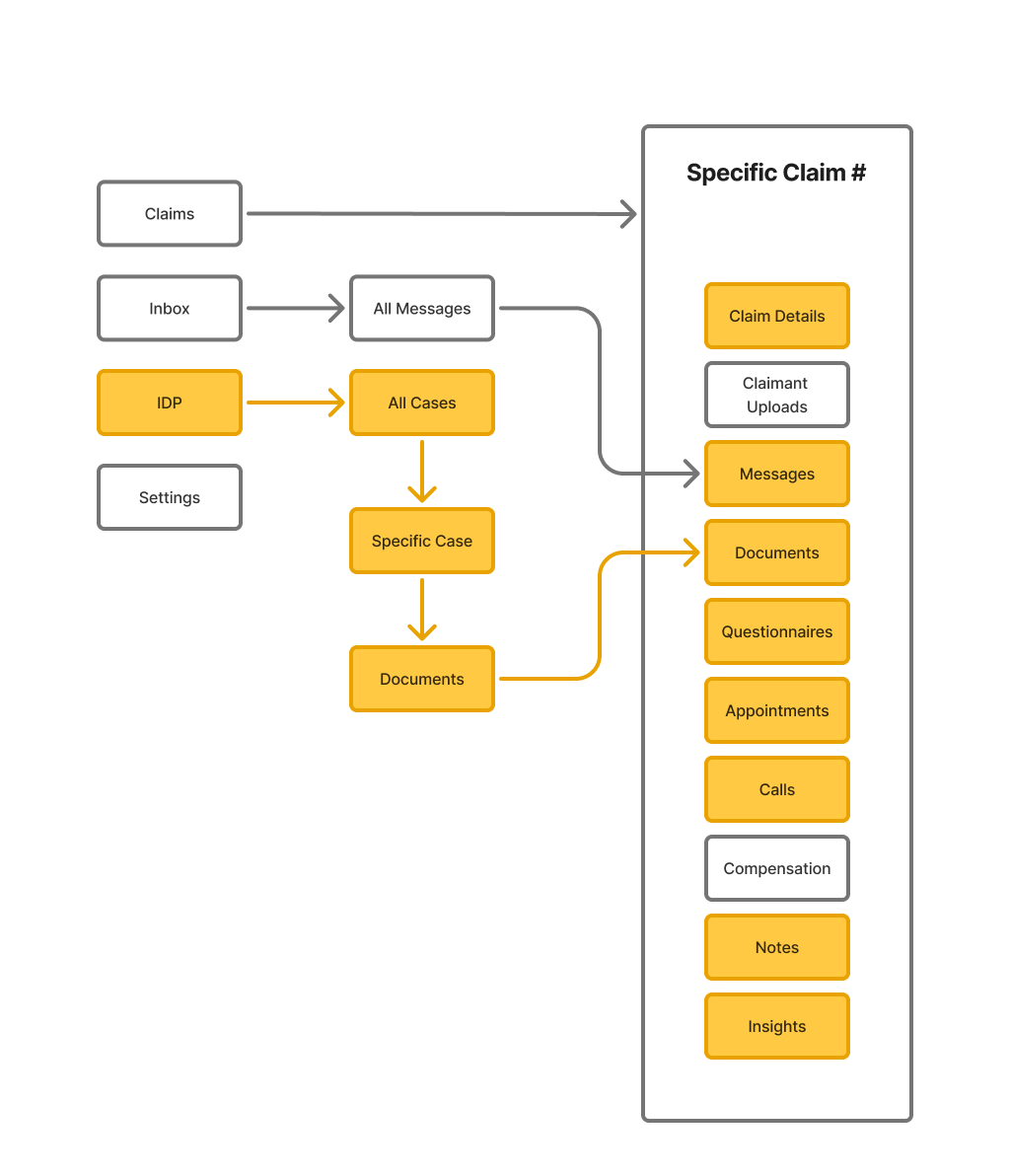
Architecture change from current to scalable future
The IDP tool didn't just change workflows, it changed the platform's architecture. As capabilities grow, the platform evolved from a standalone feature to a fully integrated document intelligence layer across the claims professional platform.
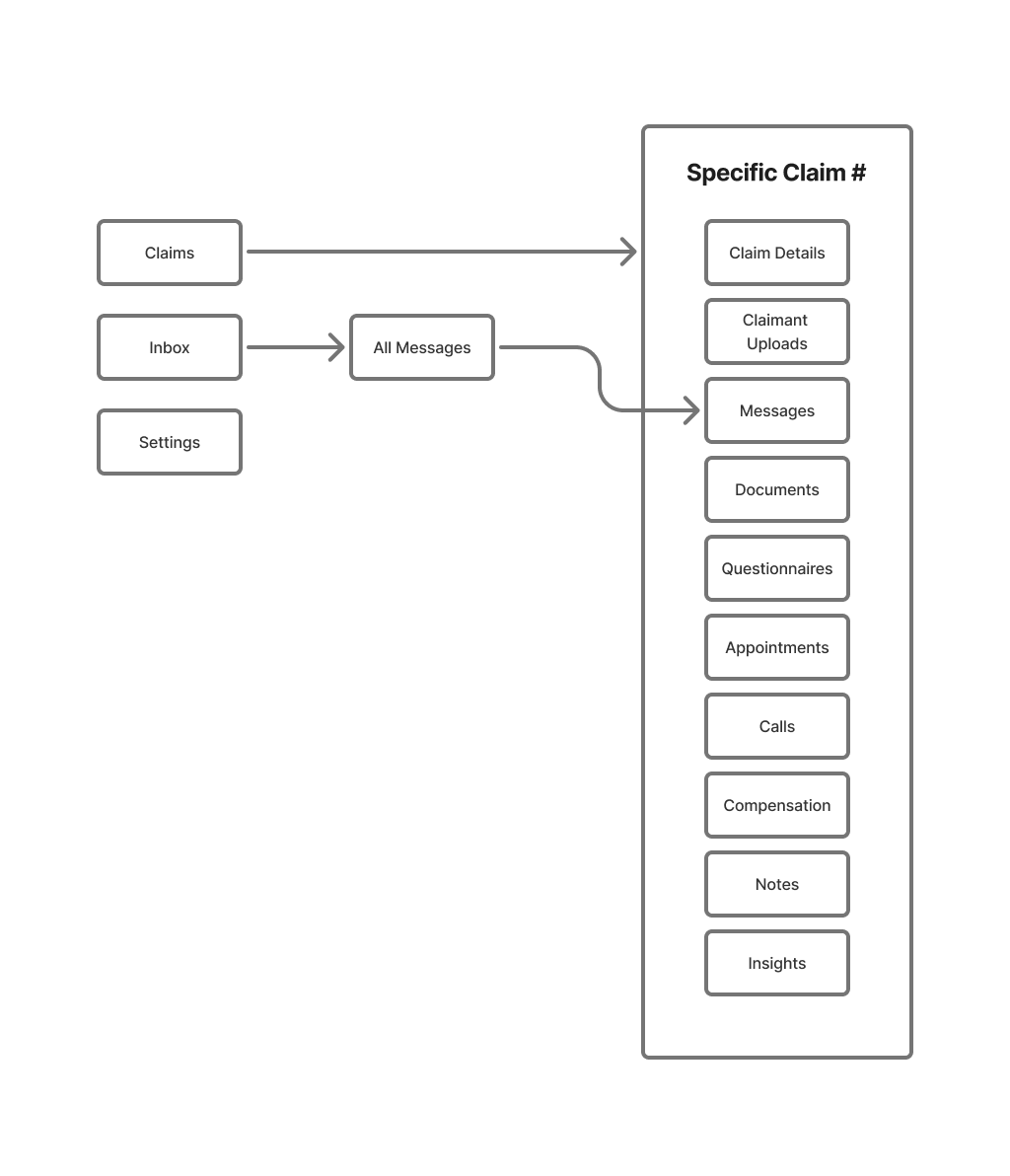
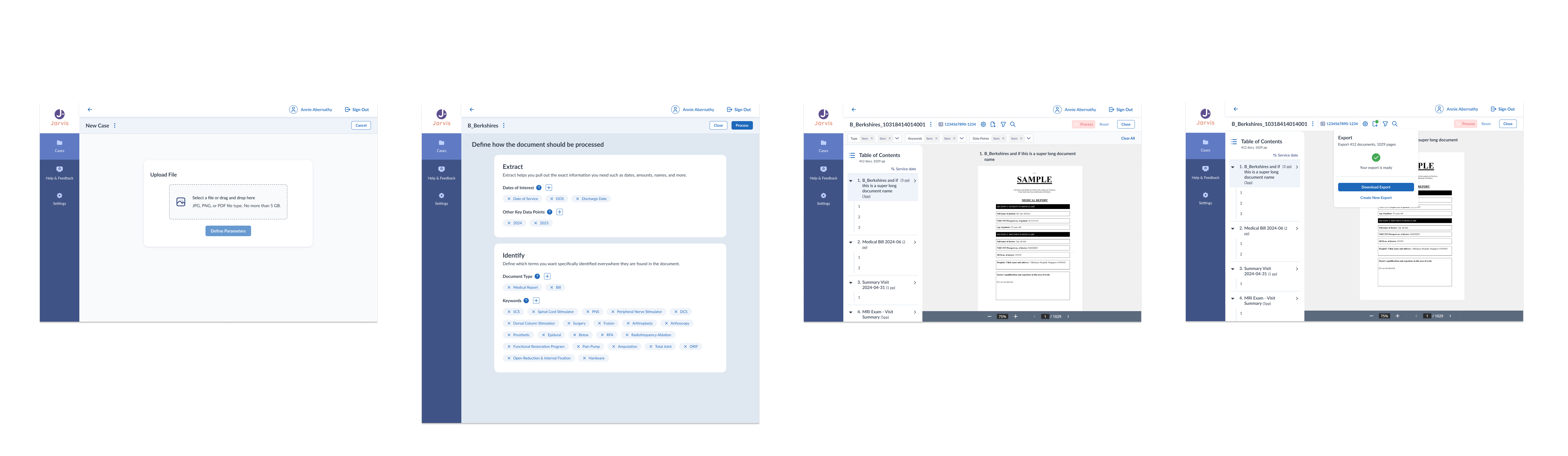
Main steps of IDP workflow
Layout structure for key Edit workspace
02
Remove the noise of blank pages & duplicates
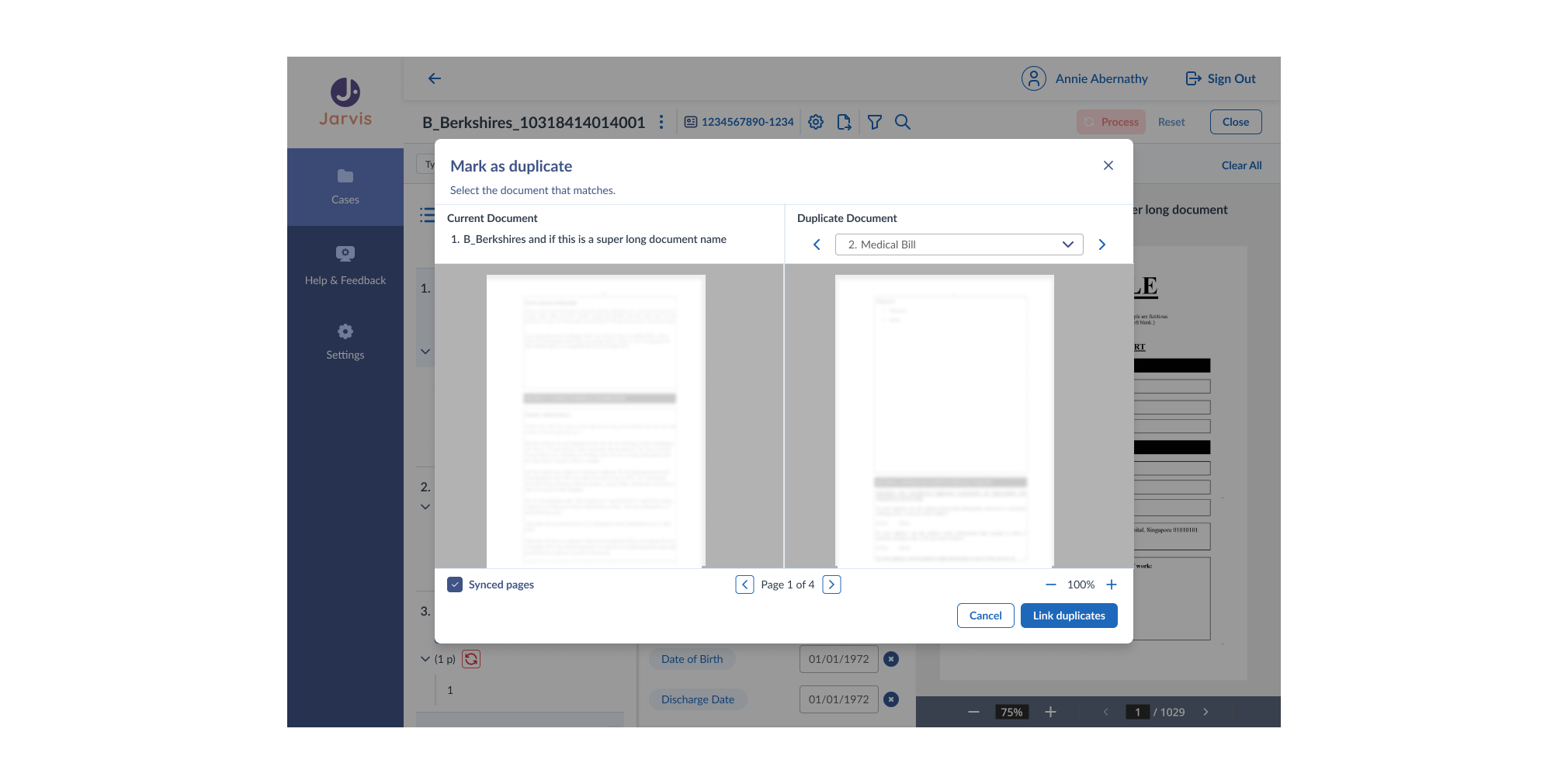
Blank pages and duplicates are noise that slow claim professionals down, and since processing is charged per page, they're a direct cost to customers too. Automatically flagging and removing them before review protected both the user experience and the customer's bottom line.
Duplicate page detection
03
Help users navigate through massive files
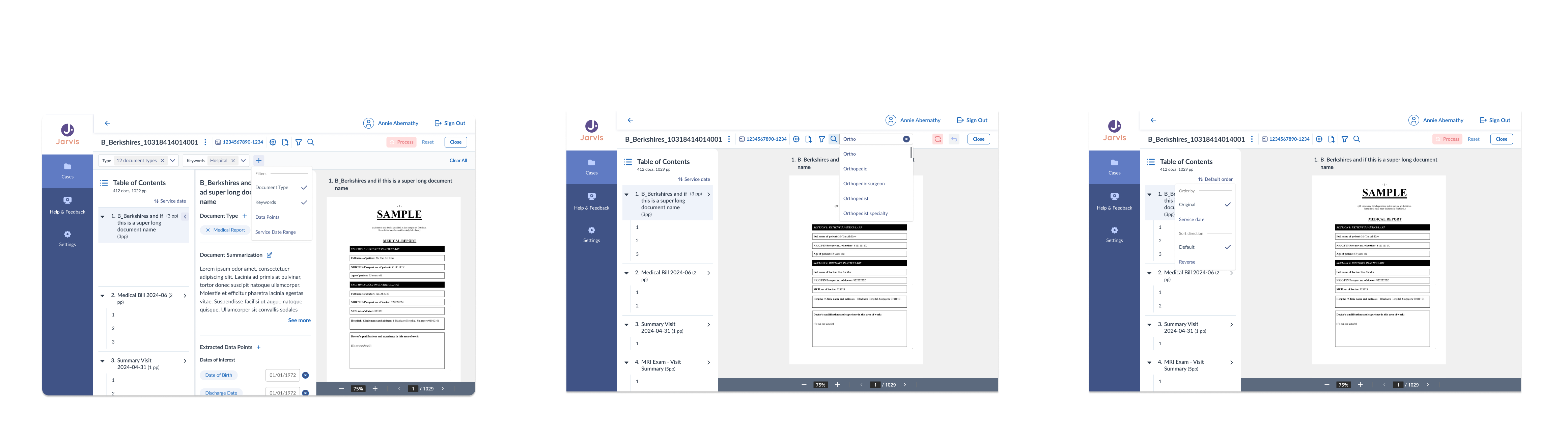
With files spanning thousands of pages, finding a specific document or data point without help is its own burden. Search, filter, and sort gave claims professionals the tools to cut through the volume and navigate directly to what they needed.
Filter, search & sort system
04
Get users what they actually need
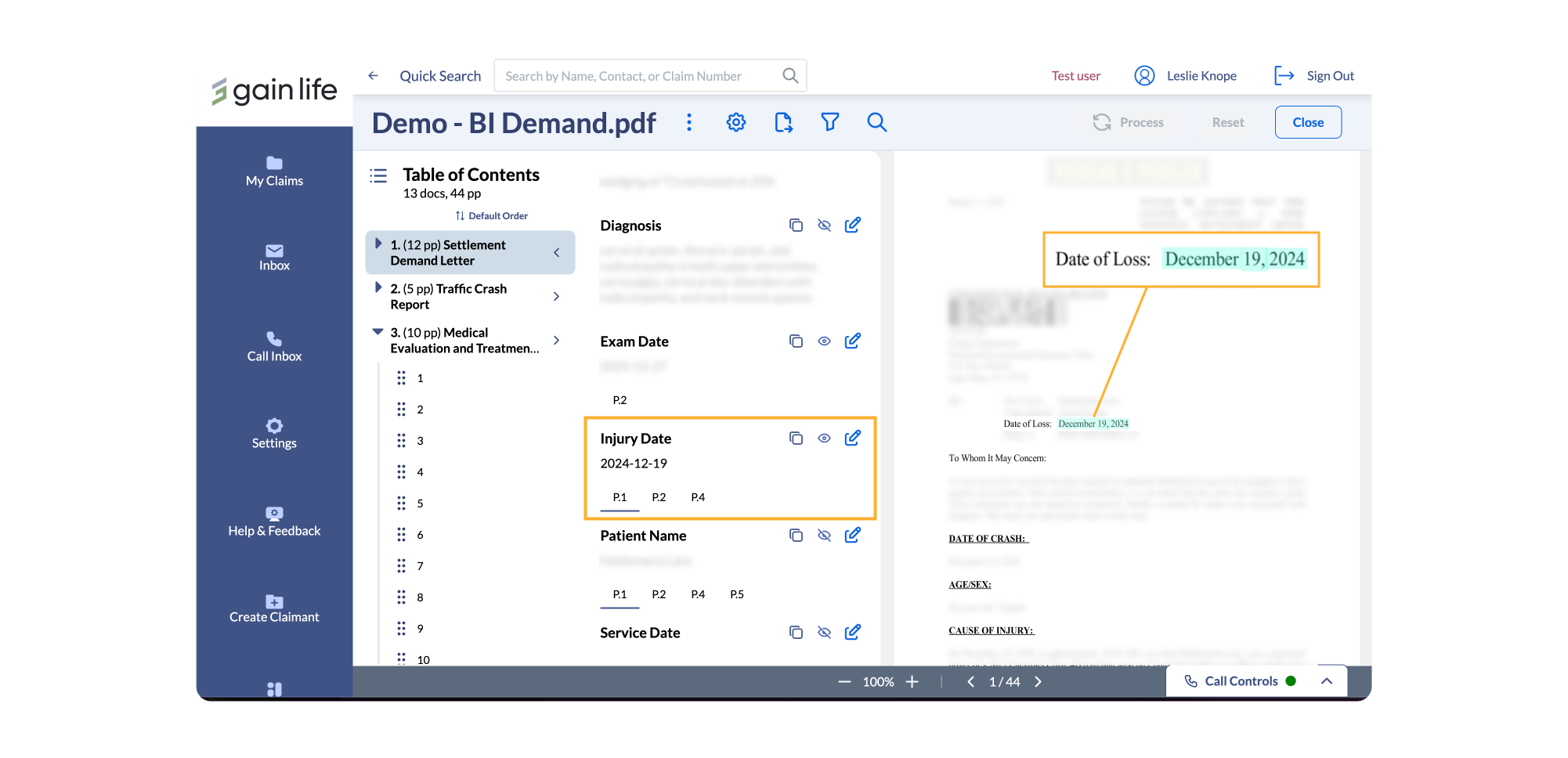
The tool automatically extracted key data at 98% accuracy and let users visually verify exactly where each extraction came from in the file, a deliberate trust-building mechanism. From there, verified data could be exported directly into their reporting workflows.
Extract, verify & export
05
Design where the tool goes next: guidance and summarization
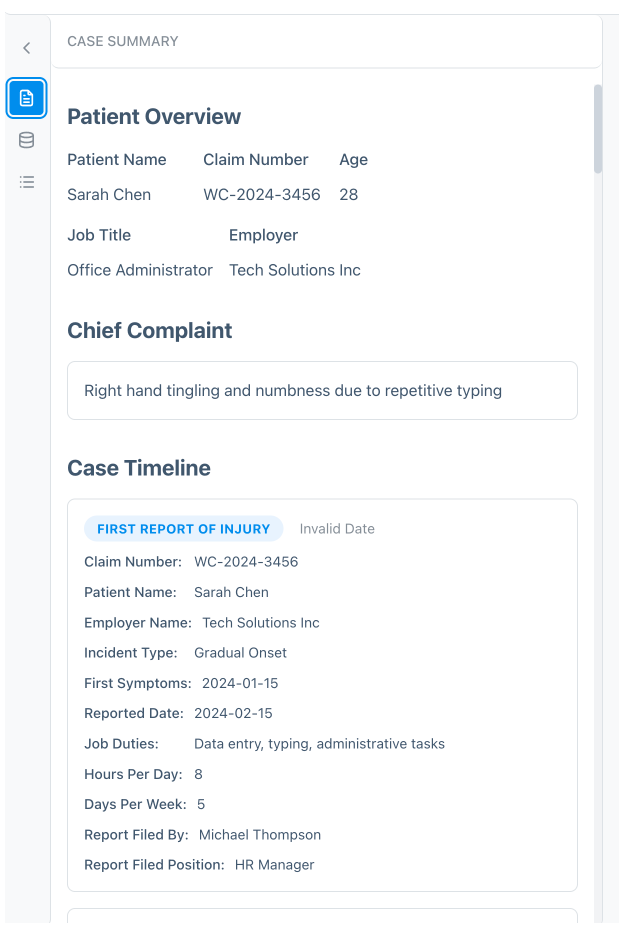
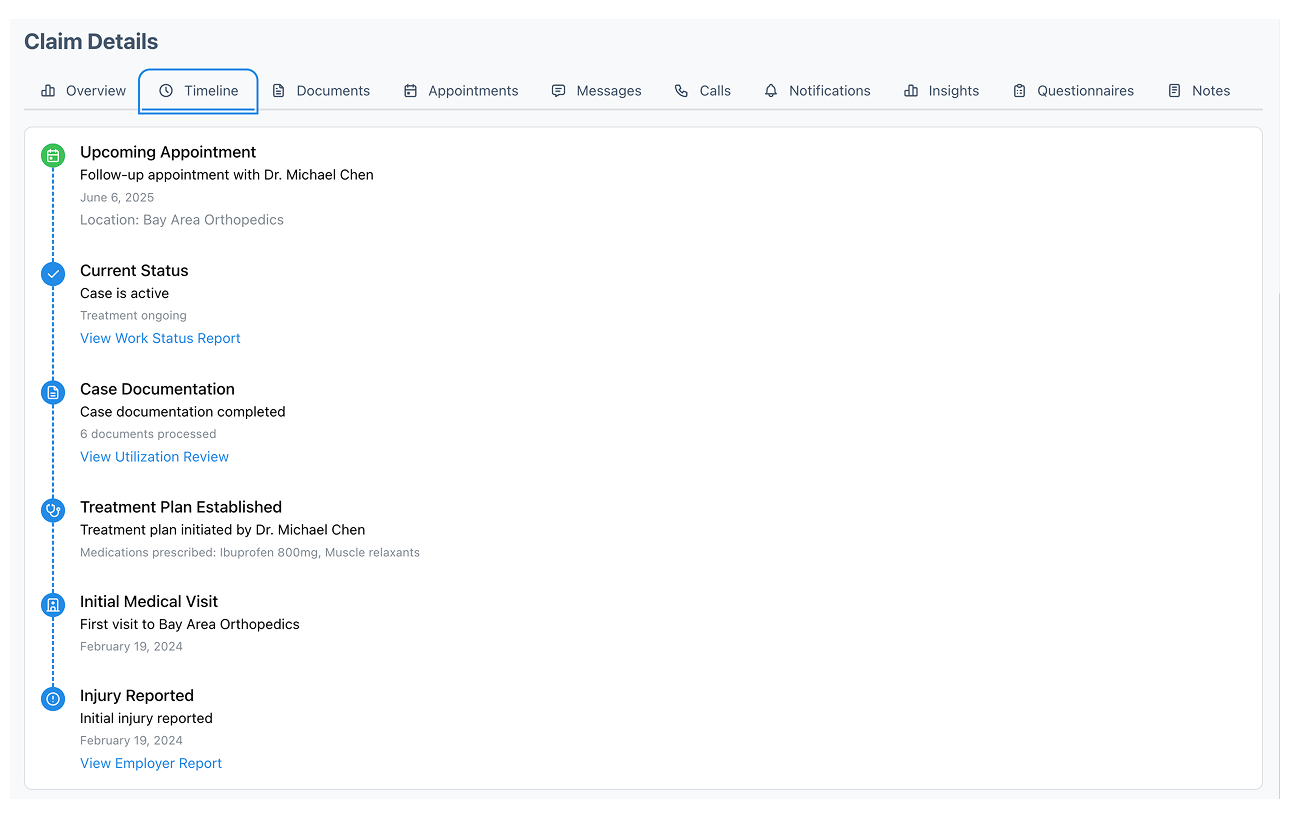
Once the core tool was stable, I started designing the next horizon: AI-generated case summaries distilling hundreds of documents into structured narrative, and claims timelines letting claim professionals see the full arc of a case at a glance. These weren't in the initial release, but designing them early informed decisions being made in the current build about data structure and navigation.
Idea for case overview functionality
Idea for claims timeline of key events
Outcome
Hours turned to minutes, and a new revenue stream unlocked
The tool transformed a hours-long manual process into minutes, earning a 4.8 out of 5 from users. More than an efficiency win, it opened a $13–22M market opportunity and gave Crosstie a competitive edge in AI-powered claims automation.
80%
Reduction in file processing time
4.8/5
User satisfaction score
3×
Faster turnaround on large files
98%+
Extraction accuracy
25k+
Page claims handled, beating out competitors
$13–22M
Serviceable & Obtainable Market (SOM) with new offering
More work
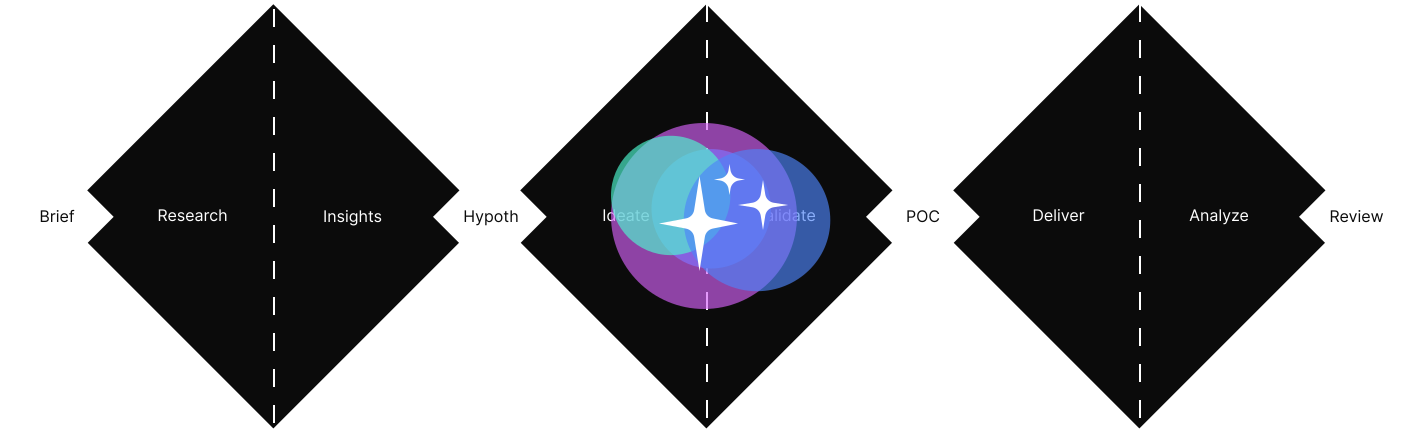
Turning design friction into forward momentum with AI
Building an AI prototyping process that opened ideation beyond Design, and led to a recommendation that changed how the whole team worked.
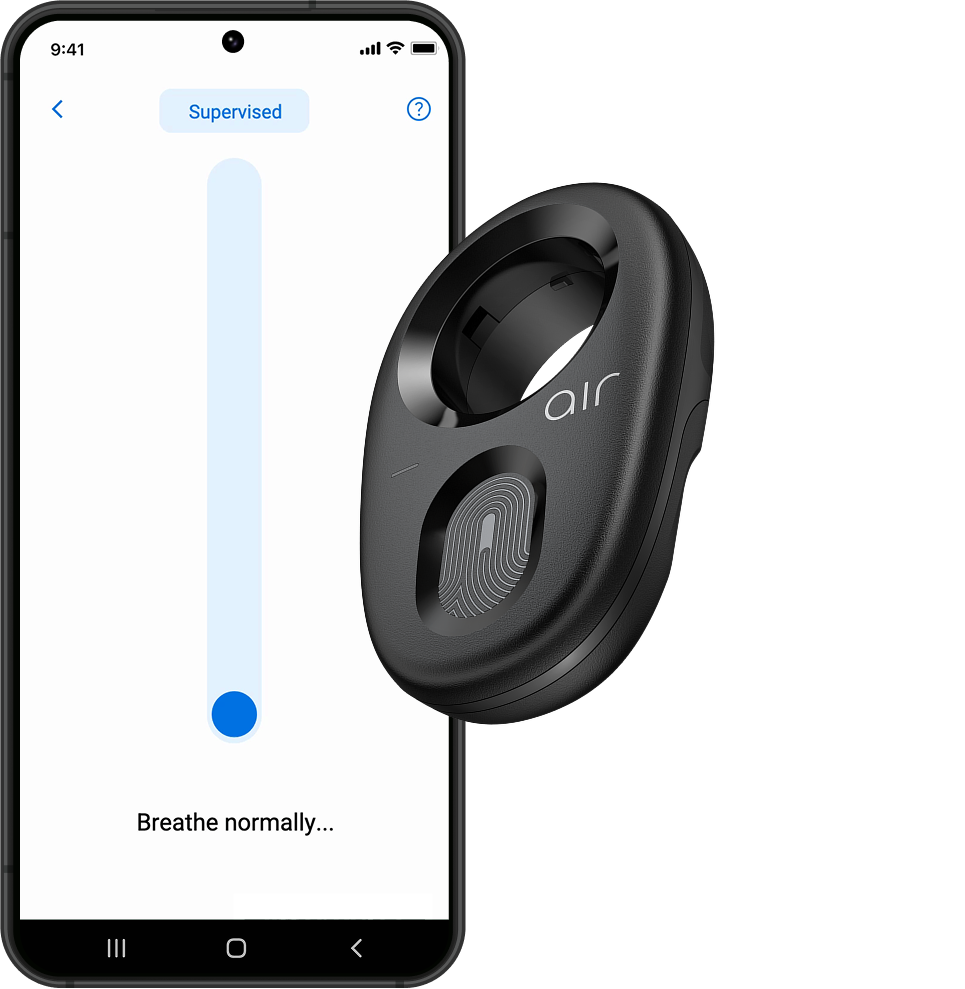
Guiding respiratory patients towards the best technique
Redesigning NuvoAir's spirometry app to guide patients through the latest ATS standards, securing FDA 510(k) clearance in January 2024.
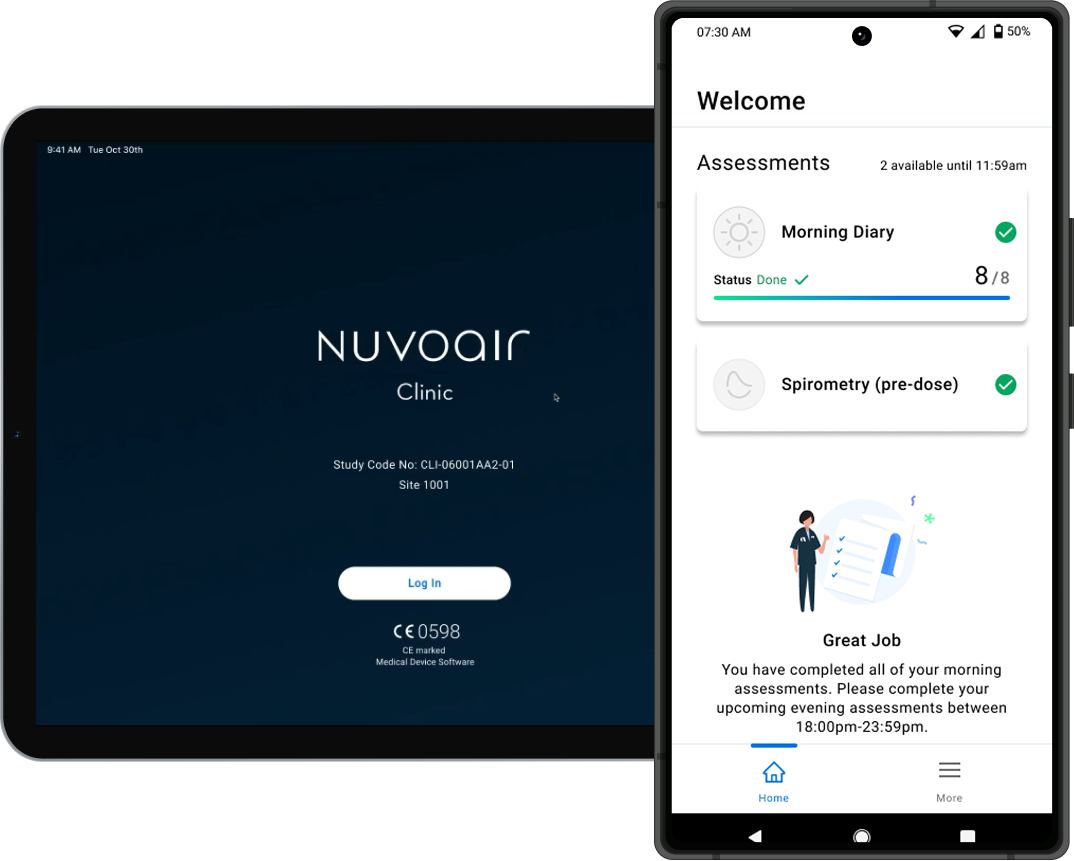
From single measurement tool to full clinical trial platform
Redesigning the two-sided clinical trial platform to reduce participant dropout and give coordinators early visibility into at-risk participants.