Overview
The Problem
Outdated standards risk business and patient outcomes, but FDA requirements are a minefield.
Updating NuvoAir's spirometry experience across the entire product family meant navigating two compounding challenges: every app was classified as a medical device, so routine updates triggered regulatory review.
Meanwhile, the new technique added complexity to a test already difficult for COPD patients, requiring clear enough guidance for unsupported home use with medical-grade results.
The Approach
Separate spirometry testing as its own app, and design updated technique for patients
Separate the necessary parts of the app as their own medical device, and update the experience to bring out the nuance in the updated technique for struggling patients. FDA compliance shaped every design decision. The interface had to guide without misleading, and inform without overwhelming a patient mid-test.
My role
I led end-to-end UX redesign: research, information architecture, real-time feedback interaction design, and design validation for the FDA submission package.
The team
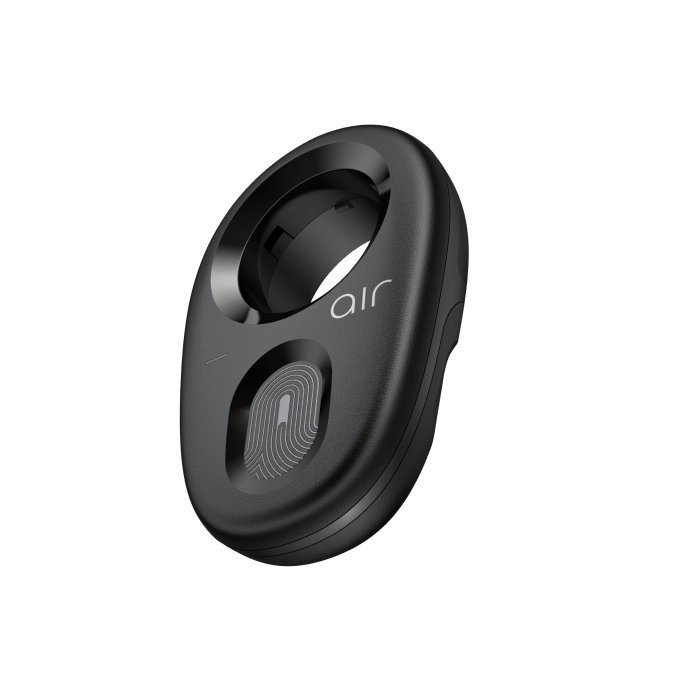
Engineering built the signal processing pipeline and Bluetooth device communication. Clinical advisors reviewed all patient-facing guidance language for medical accuracy.
01
Map regulatory requirements before touching the interface
I worked with our regulatory consultant to translate FDA 510(k) requirements into UX constraints such as what the app must show, must not mislead, and must log for audit. This shaped every design decision before a single frame was drawn.
ATS 2019 requirements
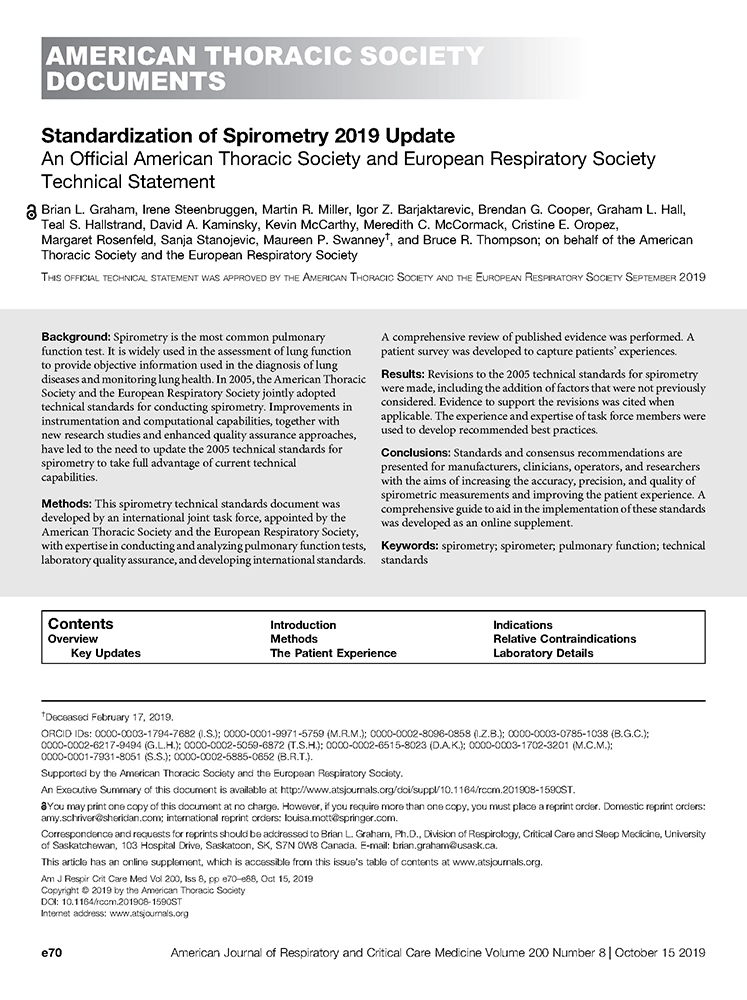

Updates to the calculations in our firmware & software

New information and guidelines for patients

Advancements to the spirometry testing technique
02
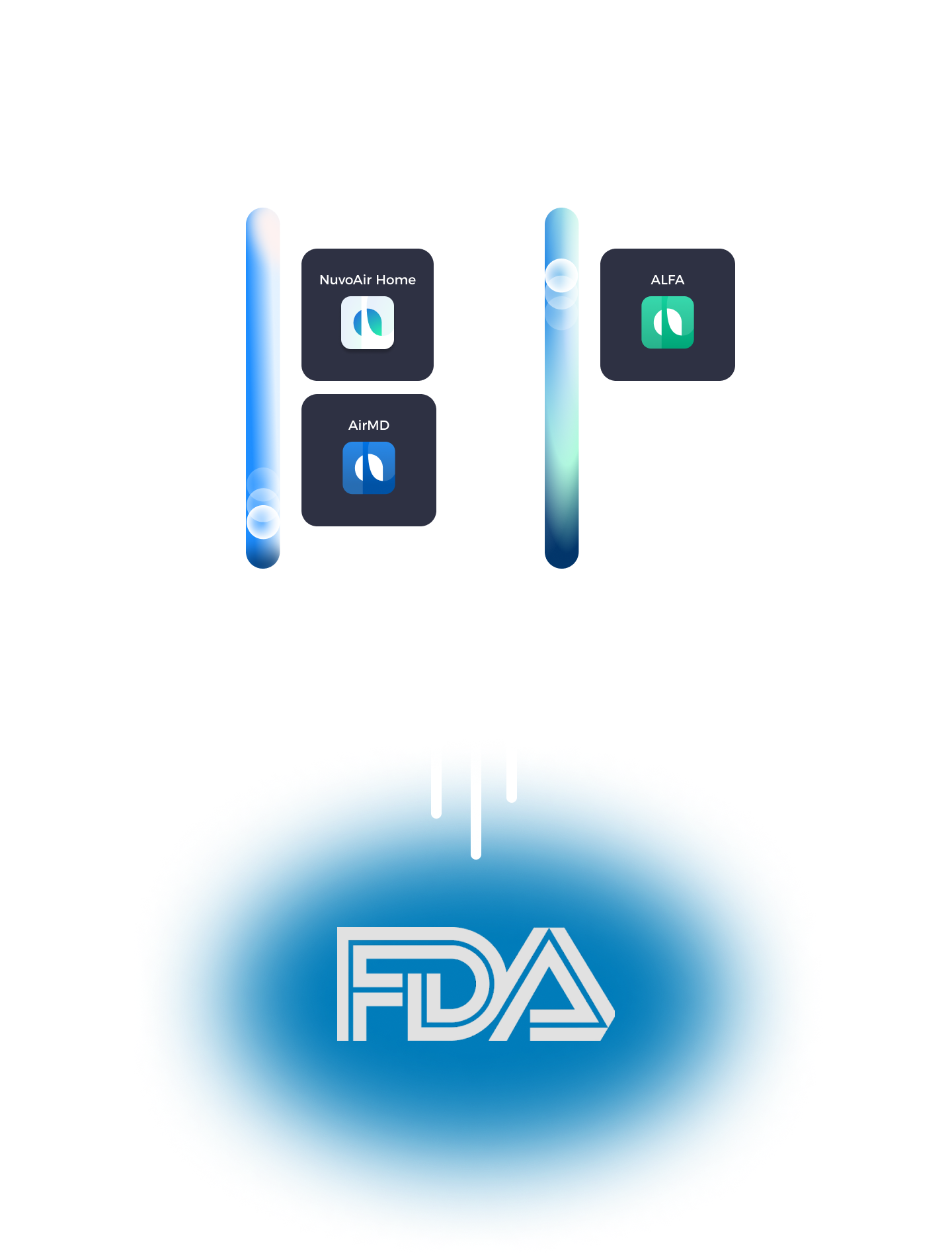
Separate the spirometry flow within an SDK that would serve as the medical device
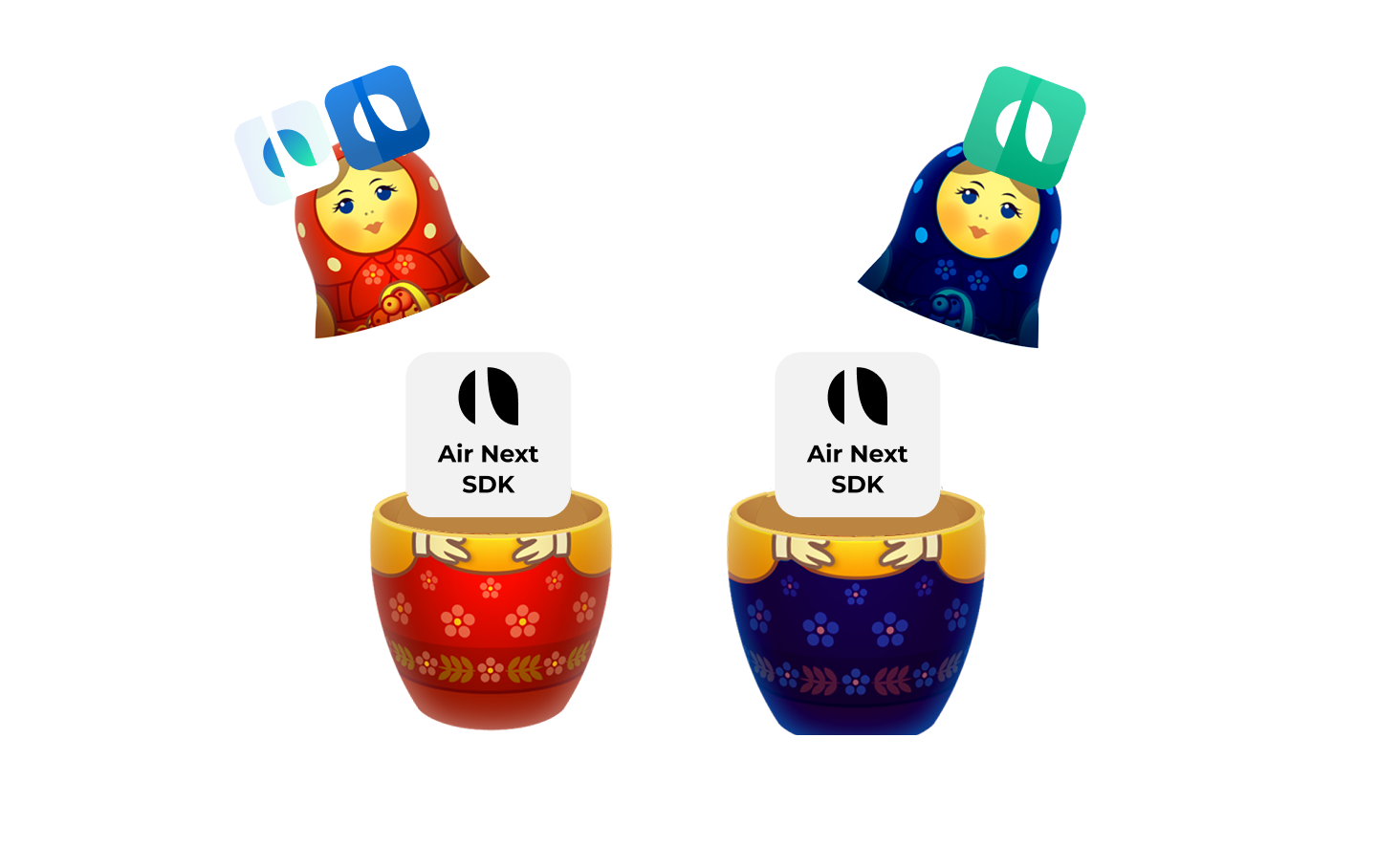
A cross-functional group including the CTO, Head of Clinical Trials, Senior PO, Regulatory, and myself workshopped a new approach to device classification. The solution was to isolate the spirometry flow into its own SDK, so it could be updated and approved independently. Non-spirometry app updates would no longer require FDA documentation.
Only the screens connected to the spirometry test would be taken out and put in the SDK.
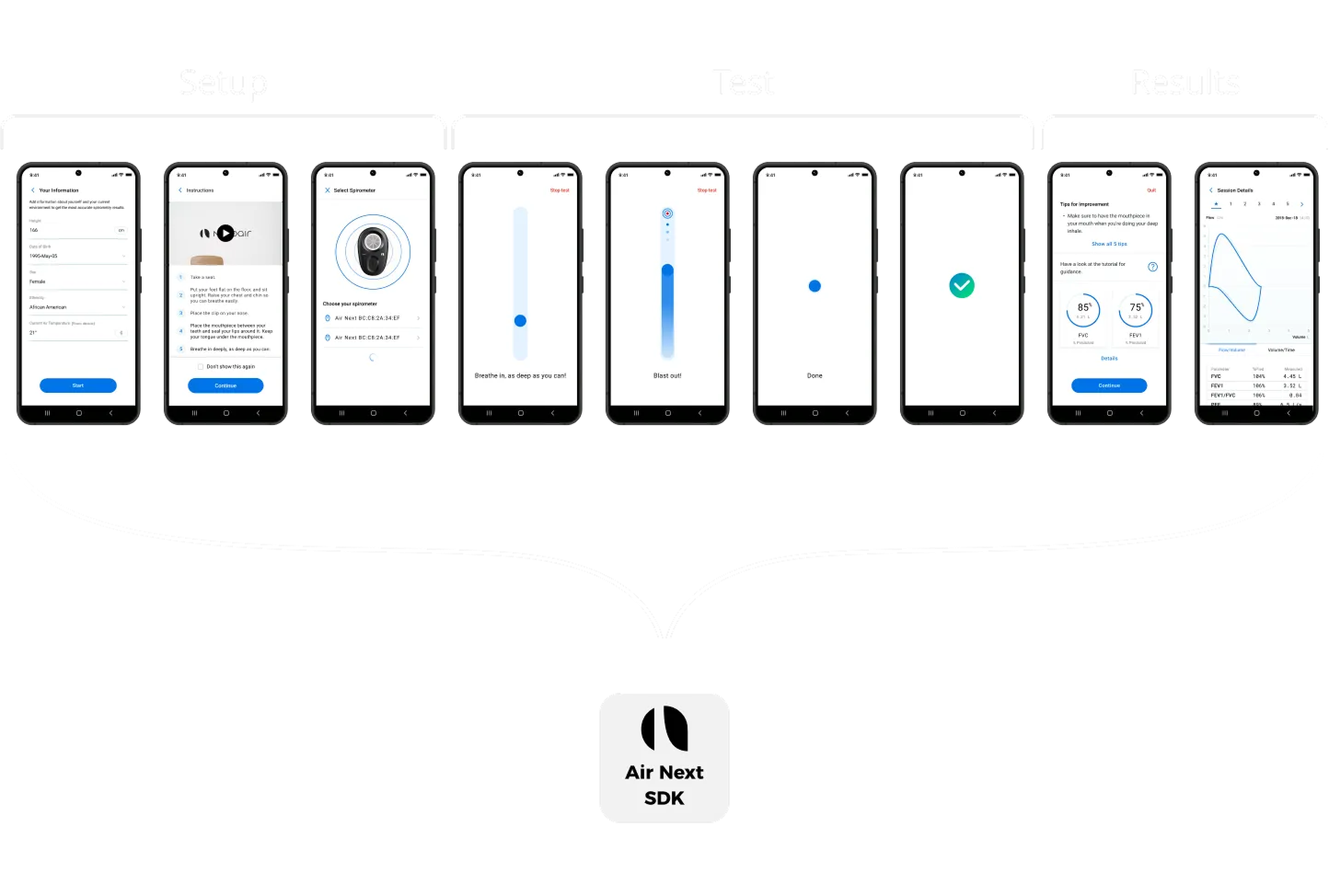
Only SDK app gets submitted for FDA approval.
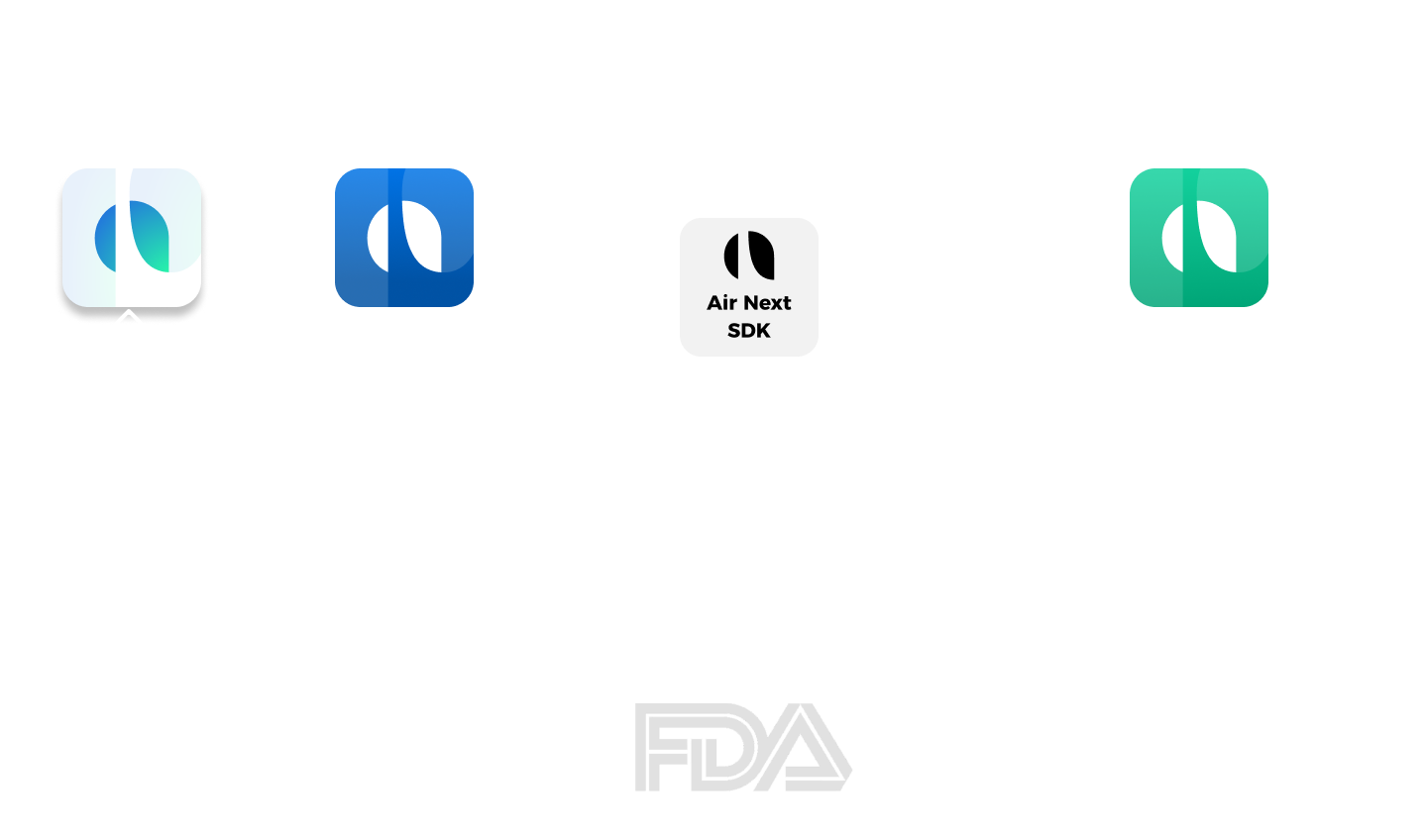
Approved SDK app would slot into our company product apps, without them needing their own FDA approval.
03
Design for technique quality, not just test completion
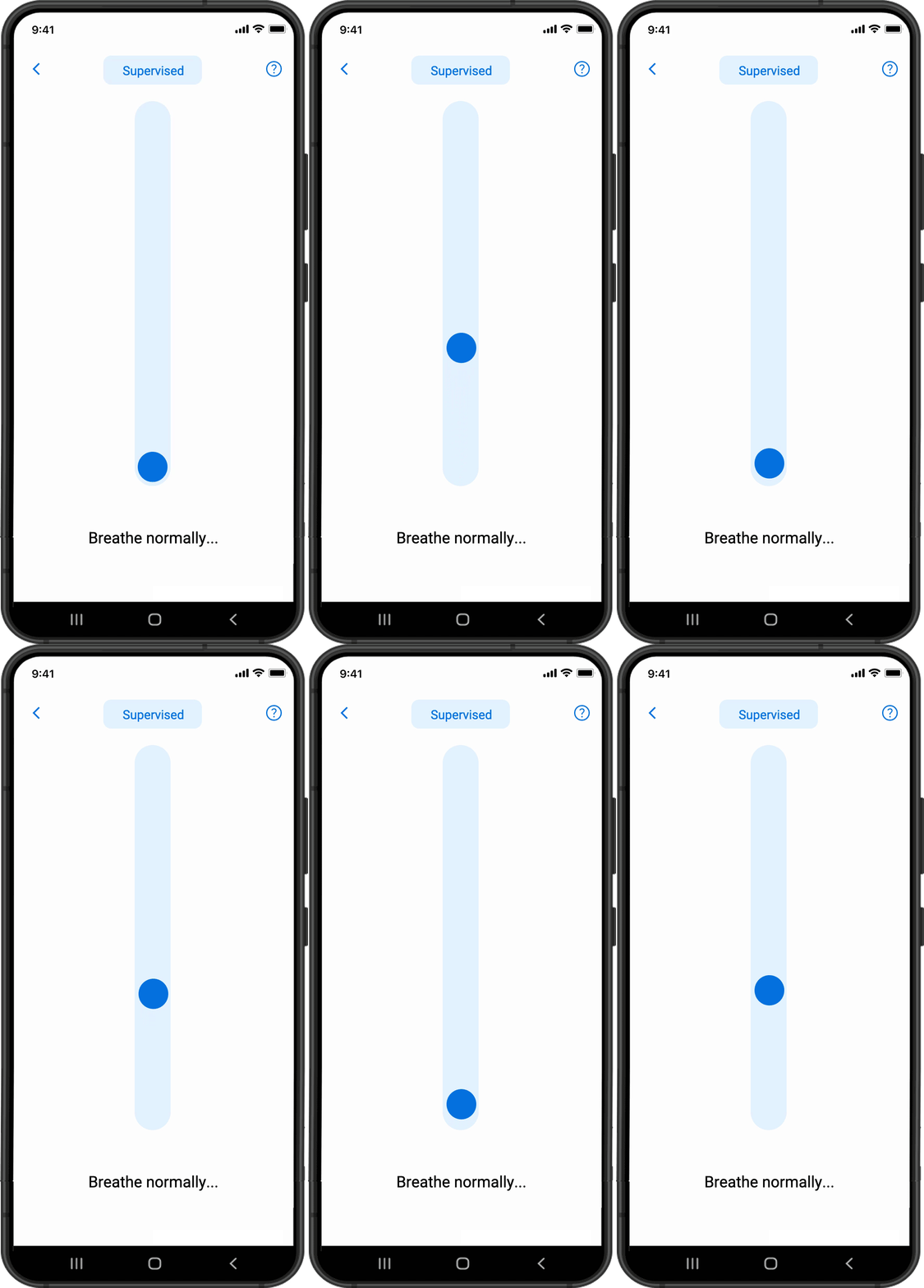
Research showed patients needed moment-by-moment feedback, not just a result at the end. I designed an animated coaching interface guiding effort, pacing, and breath hold in real time, giving patients a visible target throughout the maneuver.
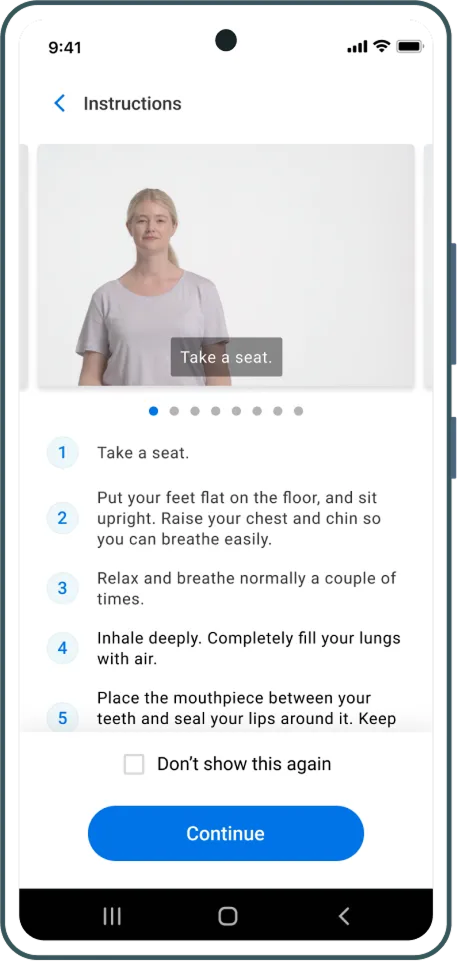
Descriptive and nuanced directives guide patients to more accurate technique.
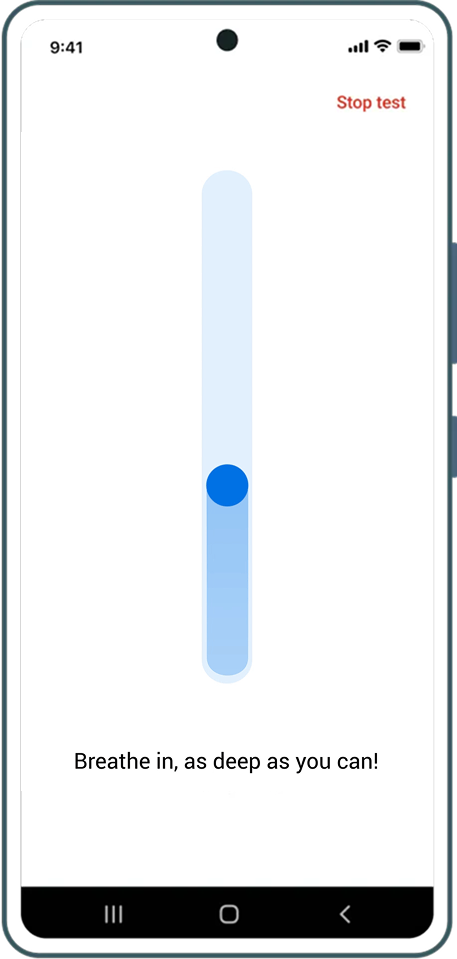
Reactive animation & audio matches a patient's breath and cues them through the spirometry tests.
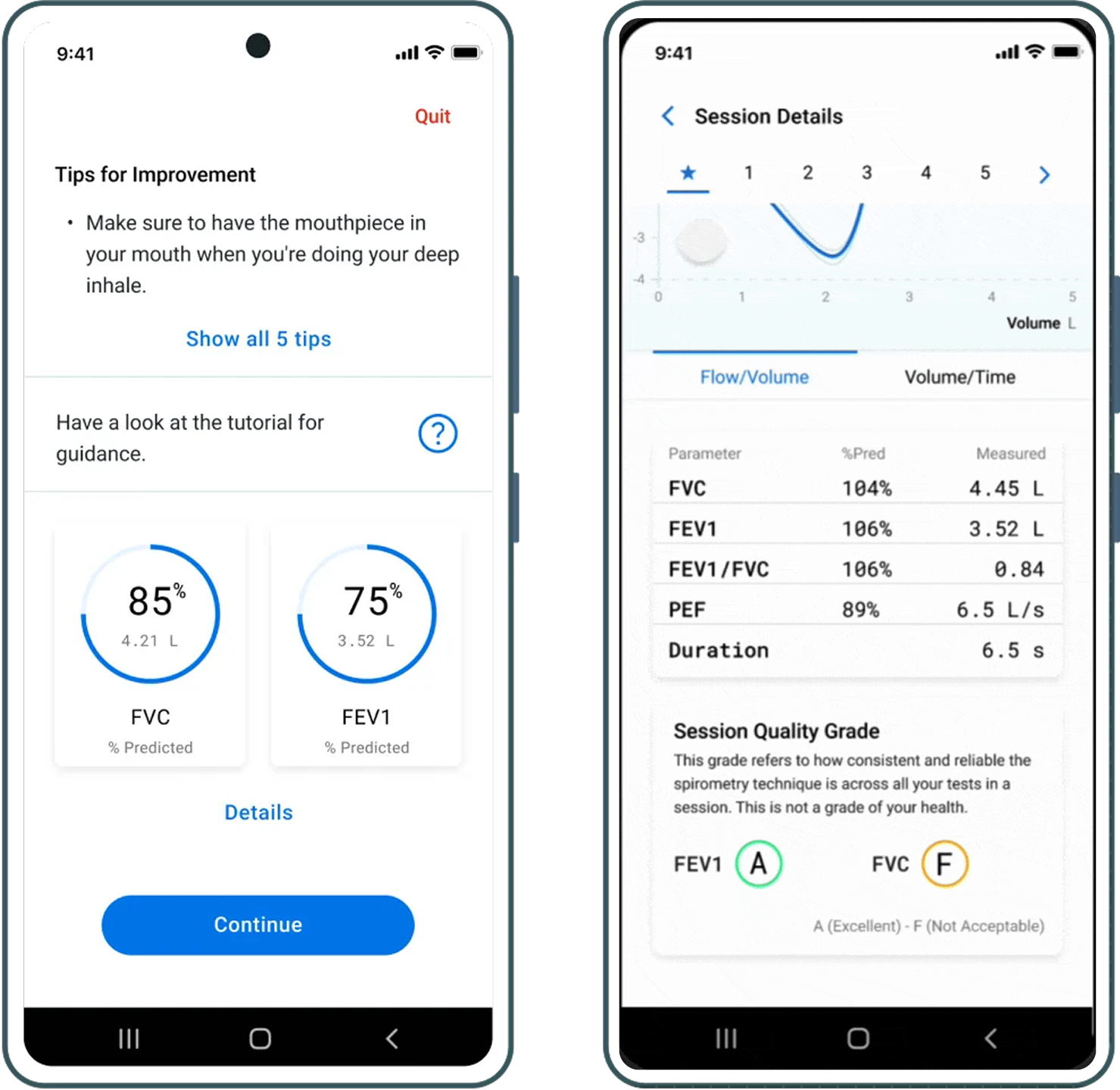
Updated results page provide a clearer look into a patients' lung function, with tips for improving technique if mistakes were made.
Outcome
FDA-approved and built to free the team
FDA user testing was a success. In January 2024, the Air Next app received official FDA approval, giving NuvoAir the agile foundation it needed to scale. This project connected dots across regulation, business strategy, and the real power of collaboration.
FDA
510(k) clearance granted January 2024
$63k+/yr
Saved in regulatory costs with new SDK setup
270+
Hours saved annually in regulatory overhead with new SDK setup
I wish I had this tool when I was first diagnosed as a kid.
— Senior citizen tester from FDA testing
More work
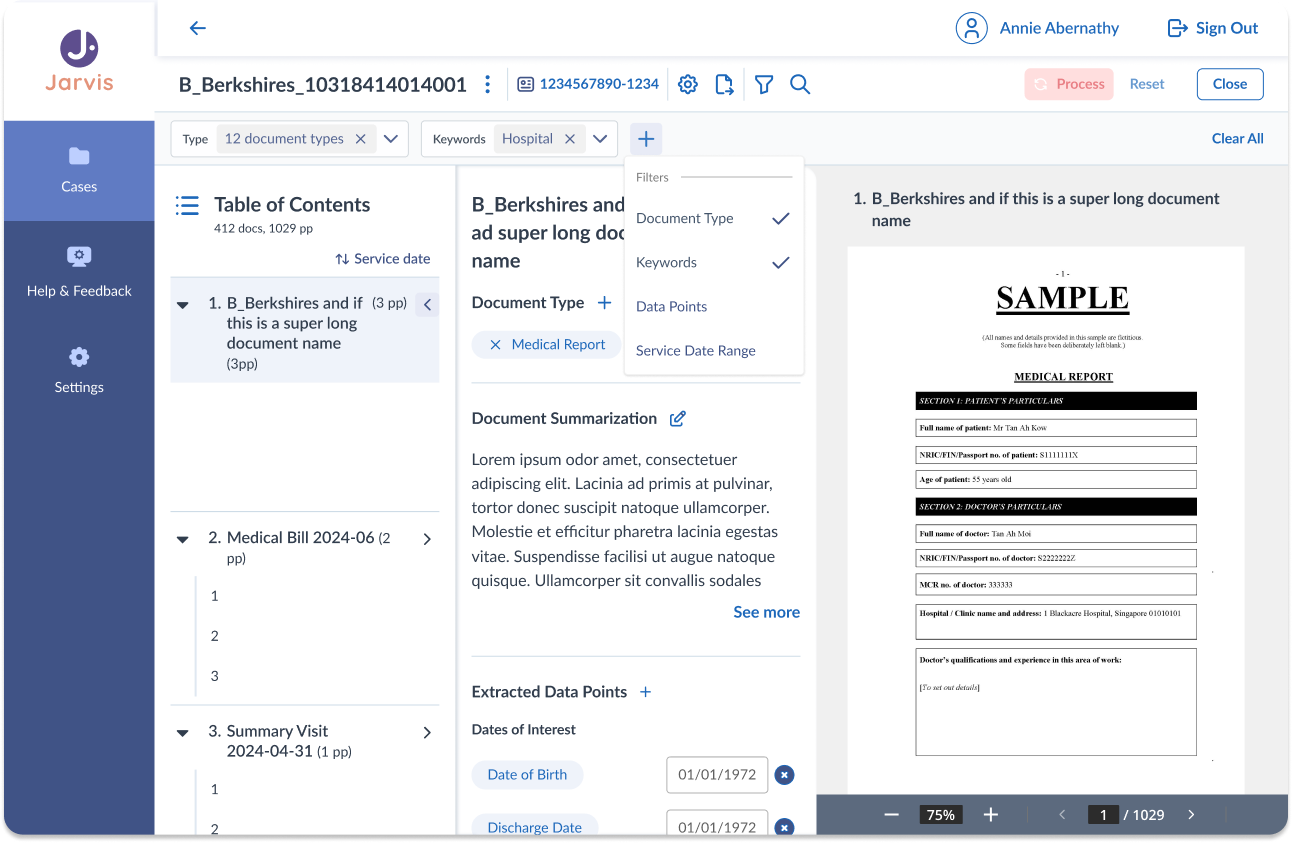
Helping claims professionals find what matters in complex files
An AI document tool helping claim professionals navigate massive claim files, turning a day of reading into minutes of verification.
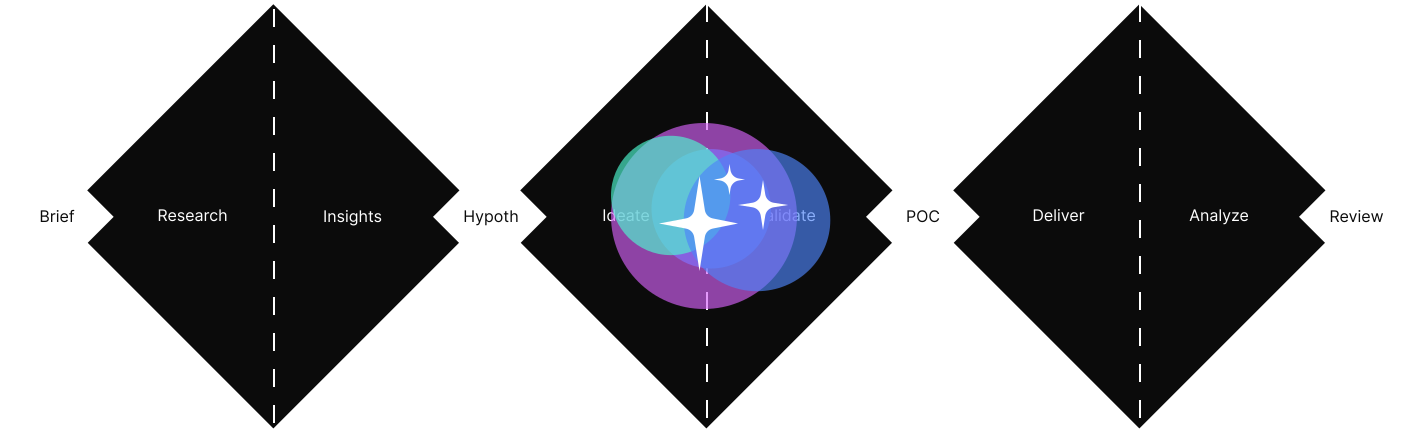
Turning design friction into forward momentum with AI
Building an AI prototyping process that opened ideation beyond Design, and led to a recommendation that changed how the whole team worked.
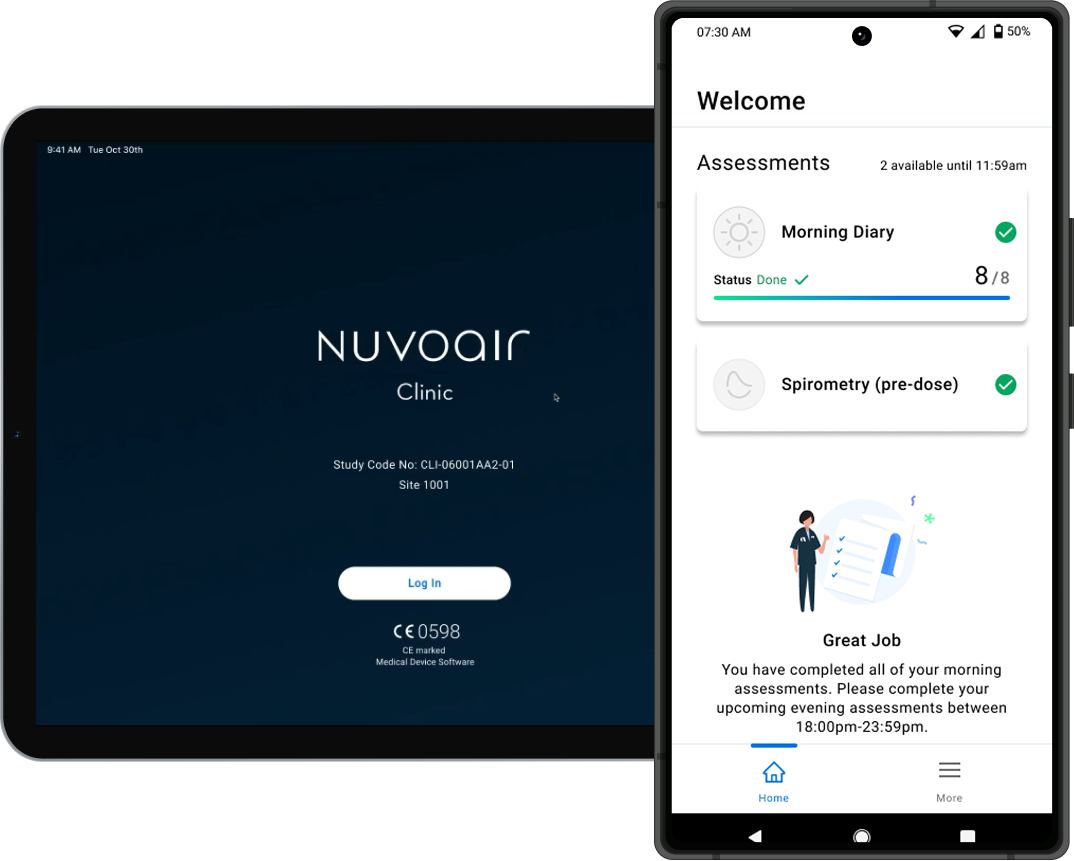
From single measurement tool to full clinical trial platform
Redesigning the two-sided clinical trial platform to reduce participant dropout and give coordinators early visibility into at-risk participants.